
A Full Mapping of HBM-Themed Targets in the A-Share Market
As High-Bandwidth Memory (HBM) becomes a core enabler for AI, high-performance computing and advanced graphics, China’s domestic capital markets have seen a rapid expansion of “HBM concept” stocks and supply-chain plays. While the most advanced HBM die and module production remains concentrated in Korea and the United States, a growing number of A-share listed companies participate in the broader HBM ecosystem—through equipment, materials, packaging, substrates, thermal solutions, and peripheral components.

HBM value chain overview
HBM production spans several stages: DRAM wafer fabrication, TSV formation and hybrid bonding, interposer and advanced substrate manufacturing, test and burn-in, packaging and integration with accelerators, and system-level deployment. Many of these stages rely on equipment and materials produced globally, including from Chinese and Japanese suppliers, with the finished HBM modules currently dominated by the “Big Three” memory makers.
In the A-share market, HBM-themed targets typically map to segments such as wafer and packaging equipment, specialty materials (chemicals and films), OSAT capacity, substrates and interposers (including organic and silicon-based), and datacenter infrastructure that benefits from AI and HBM proliferation. Investors should view these firms as leveraged plays on HBM demand rather than pure HBM producers.
First layer: front-end and packaging equipment suppliers

The first category of HBM-linked A-share targets includes equipment manufacturers whose tools are used in DRAM and HBM-related processes—etch, deposition, CMP, cleaning, inspection and packaging. HBM requires deep-reactive-ion etch for TSVs, conformal ALD/CVD liners, advanced CMP, hybrid-bonding tools, and high-precision metrology; Chinese companies providing localized versions of these tools position themselves as strategic suppliers as domestic memory makers and OSATs ramp advanced packaging lines.
From an investment perspective, these equipment plays are sensitive to capital expenditure cycles in China’s memory fabs and packaging houses. As HBM-related capex grows globally and domestic firms seek localization to mitigate export-control risks, A-share equipment providers can benefit from replacement demand, co-development projects and government-backed capacity expansions.
Second layer: materials and consumables producers
A second major group comprises specialty chemical and material producers. HBM relies on high-purity gas-phase precursors (for ALD/CVD barrier and liner deposition), advanced underfills and adhesives, thermally conductive insulating films, CMP slurries, and high-performance photoresists and etch chemistries. Japanese firms have long dominated many of these niches, but Chinese chemical companies are accelerating efforts to produce local substitutes and complementary materials.
A-share listed chemical suppliers involved in semiconductor-grade precursors, advanced polymers, CMP consumables and thermal interface materials are conceptually tied to HBM growth because higher HBM production volumes increase demand for their products. Investors should consider not only revenue linkage but also the qualification status of these materials in actual HBM or advanced packaging lines, as qualification cycles can be long and technically demanding.
Third layer: OSATs and advanced packaging houses

HBM’s reliance on 2.5D/3D packaging, hybrid bonding and interposer assembly makes outsourced semiconductor assembly and test (OSAT) companies central to the ecosystem. Chinese OSATs that invest in fine-pitch assembly, TSV-capable flows, and CoWoS-style integration are natural HBM concept stocks within the A-share universe.
These firms’ linkage to HBM is twofold: they may eventually assemble domestic HBM-like stacked DRAM products, and they can participate in global supply chains by providing advanced packaging services for domestic accelerators, ASICs or memory modules tailored to AI workloads. As HBM packaging capex grows worldwide, OSATs with credible technology roadmaps can see utilization and pricing power increase, particularly when domestic hyperscalers and AI companies prefer local partners for strategic reasons.
Fourth layer: substrates, interposers and PCB players
HBM modules typically sit on silicon interposers or advanced organic substrates that route wide memory interfaces to accelerators. While leading-edge silicon interposers are still concentrated outside China, A-share listed substrate and PCB companies working on high-layer-count organic substrates, advanced BT materials, and high-speed PCB solutions are often grouped into HBM and AI hardware themes by local analysts.
These companies benefit indirectly from HBM adoption: as AI servers and accelerators become more memory-dense, substrate and board complexity increases, driving demand for high-end packaging substrates and system boards. Investors should examine whether specific firms are supplying substrates or PCBs for AI accelerators, GPUs, or HBM-related modules, and whether they have R&D plans aligned with high-bandwidth signaling and thermal needs.
Fifth layer: thermal management and datacenter infrastructure
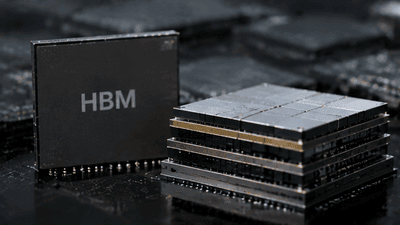
HBM’s power density and thermal challenges have already pushed many high-end AI clusters toward liquid cooling, cold plates, rear-door heat exchangers and even immersion cooling. A-share companies providing cooling equipment, industrial fluids, heat exchangers, and integrated datacenter infrastructure are indirect HBM beneficiaries because their addressable market expands as HBM-enabled AI nodes consume more rack power and require sophisticated thermal management.
Capital markets often group these names under broader “AI infrastructure” or “liquid cooling” themes, but their revenue growth is nonetheless structurally linked to the proliferation of HBM-based accelerator nodes. Detailed mapping of revenue exposure to AI servers, racks and cooling projects is critical for separating genuinely leveraged players from generic industrial equipment firms.
HBM concept vs. pure-play: managing expectations
It is important to distinguish between “HBM concept” stocks and direct producers of HBM dies or finished modules. Current HBM production remains an oligopoly dominated by SK hynix, Samsung and Micron; domestic Chinese memory makers are ramping DRAM and experimenting with stacked memory, but they are still in earlier stages relative to the global incumbents.
A-share HBM-themed targets therefore represent supply-chain and infrastructure exposure rather than pure HBM revenue streams. For investors, this means that HBM-related narratives may drive sentiment and valuation multiples, but actual earnings sensitivity will depend on each company’s real share of business tied to advanced packaging, AI server projects, materials qualified in HBM-like flows, and long-term contracts with memory or accelerator vendors.
Using a mapping framework for stock selection
To build a coherent view of HBM-themed A-share opportunities, investors can adopt a mapping framework that classifies companies by proximity and leverage to HBM demand:
- Tier 1 (direct process linkage): Equipment and materials used directly in HBM-relevant process steps (TSV etch, hybrid bonding, ALD liners, CMP, advanced underfills, thermal films).
- Tier 2 (advanced packaging and substrates): OSATs with fine-pitch lines, substrate/interposer suppliers, PCB makers for AI accelerators.
- Tier 3 (datacenter and thermal infrastructure): cooling, power, racks, and integrated infrastructure linked to AI clusters where HBM is deployed.
- Tier 4 (peripheral beneficiaries): generic AI-related IT services, cloud operators or other hardware producers whose linkage to HBM is more diffuse.
Within A-shares, many analyst “HBM concept” lists mix Tier 1–3 companies with more speculative Tier 4 names. Tools and data from sector reports can help investors prioritize those with clear, verifiable exposure to specific HBM supply-chain segments.
Capital market behavior around HBM themes
HBM-related narratives have already influenced valuations in multiple markets. Global forecasts see the high-bandwidth memory market growing at compound rates above 25% through the early 2030s, creating expectations for sustained capex and supply-chain expansion.
In the A-share market, thematic rotations into AI, HBM and advanced packaging have driven periodic surges in selected equipment, materials and infrastructure names, often ahead of actual earnings delivery. Investors should be aware of this pattern: sentiment-driven rallies can be followed by consolidation when revenue and margin contributions lag the narrative. A structured mapping of genuine HBM exposure can help differentiate between sustainable growth stories and purely thematic trades.
Risk factors specific to A-share HBM plays
HBM-themed A-share investments face several specific risks:
- Technology gap and qualification risk: Some domestic equipment and materials are still undergoing qualification; delays or failures can postpone HBM-linked revenue realization.
- Export control and geopolitics: Restrictions on advanced tools or IP may change the pace and scope of domestic memory and packaging ramps, affecting downstream suppliers.
- Capex cyclicality: Semiconductor capital expenditure tends to be cyclical; overshooting capacity in response to HBM demand can lead to later downturns impacting equipment and material orders.
- Valuation and liquidity swings: Thematic interest can drive valuations away from fundamentals; sudden sentiment shifts in the A-share market may create high volatility in HBM concept baskets.
Prudent investors will integrate these risks into position sizing and time horizons, complementing thematic enthusiasm with bottom-up analysis of product competitiveness and contract visibility.
Building a practical watchlist
Rather than seeking an exhaustive list—which quickly becomes outdated—investors can construct a dynamic watchlist focusing on key supply-chain nodes:
- Identify A-share companies with exposure to TSV, hybrid bonding, ALD/CVD equipment, CMP consumables and advanced packaging flows used by domestic memory makers or OSATs.
- Track domestic chemical producers supplying semiconductor-grade precursors, underfills, TIMs and advanced polymers qualified or in qualification for AI/HBM-related packaging projects.
- Monitor OSATs, substrate and PCB companies that publicly disclose orders or partnerships related to AI accelerators, GPUs, or domestic stacked-memory initiatives.
- Follow cooling and datacenter-infrastructure providers that highlight liquid or immersion solutions tailored to high-density AI racks in their investor communications.
Aligning this watchlist with sector and broker reports focused on “HBM concept stocks” and AI hardware chains in the A-share market can provide a more complete and continuously updated mapping of investable HBM-related targets.
Conclusion
HBM’s rapid rise in AI and HPC systems is reshaping global semiconductor supply chains and opening multiple layers of opportunity in China’s A-share market. While direct HBM die production remains concentrated in a small group of global memory makers, A-share investors can access the theme via equipment, materials, OSATs, substrates, and infrastructure providers whose businesses scale with HBM-related capex and AI server deployments. A full mapping of HBM-themed targets thus means understanding the value chain, classifying companies by their proximity to HBM processes and demand, and integrating sector research to track which names convert narrative into sustainable earnings.
You May Like

Narrowing Spread Between NAND Spot and Contract Prices in 2026 – A Signal
By 2026, one of the most watched metrics in the NAND flash market has started to shift in a subtle but meaningful way: the spread between spot prices and long‑term contract prices is narrowing. For casual observers, this may look like just another incremental change in a notoriously volatile industry. For memory makers, module houses, device OEMs, and data center buyers, however, a tightening gap between spot and contract prices is a signal—a reflection of evolving supply–demand balance, risk perceptions, and strategic behavior on both sides of the market.

Price Divergence Trading Strategies Between NAND Flash and DRAM ETFs
NAND flash and DRAM sit at the core of AI storage and computing power. Both are memory, but they are not the same business. DRAM is main memory—fast, volatile, and central to high‑bandwidth workloads like AI training and inference. NAND is non‑volatile storage—slower than DRAM, but crucial to persistent data and large‑scale object storage. The cycles that drive their pricing and margins overlap, yet they often diverge. That divergence is where trading strategies between NAND and DRAM ETFs become interesting.

China’s HBM Localization Progress: The Catch-Up Pace of CXMT and XMC
China’s drive to localize advanced memory technologies has accelerated over the past several years. High-Bandwidth Memory (HBM) sits near the center of that strategy because it is integral to AI accelerators, high-performance computing (HPC) and other strategic compute platforms. Two domestic players—ChangXin Memory Technologies (CXMT) and XMC (Xianghui Memory, commonly referred to as XMC)—have become focal points in assessing how quickly China can close the gap with international incumbents on HBM die, stacking, and packaging.

Thermal Simulation Challenges and Solutions in 3DIC AI Chip Design
As AI workloads push chips to deliver ever higher compute density, designers are increasingly turning to three‑dimensional integration (3DIC) to stack dies vertically and pack more functionality into limited footprints. While 3DIC architectures unlock significant performance and bandwidth advantages, they also introduce complex thermal behaviors that are far harder to predict and manage than in traditional 2D layouts.
An Attempt at Compiling a Memory+Compute Fusion Thematic Index – A Dual-Track Framework
Most AI investors talk about “compute” as if it were the whole story: GPUs, accelerators, chips, cores. But every one of those cores needs somewhere to read from and write to. Memory and storage define how wide the data highway really is. In practice, AI performance is a fusion of compute and memory, not a solo act. So why do so many indices and ETFs separate them into different silos—one for semiconductors, one for memory, one for data centers—when the actual workloads keep blending them?

Surging Demand for Laser Drilling and Plasma Dicing Equipment in Advanced Packaging
Advanced packaging has become one of the semiconductor industry’s most important growth engines, and it is now pulling a surprising set of process tools into the spotlight. Among the most in-demand are laser drilling and plasma dicing equipment. These machines sit close to the heart of heterogeneous integration, fan-out packaging, wafer thinning, TSV formation, glass substrate processing, and other advanced flows where precision, yield, and throughput matter enormously. As packaging moves from a back-end afterthought to a strategic platform, the equipment used to shape, open, and separate materials has become just as important as the dies themselves.
D2D Interface Bandwidth and Latency Comparison in Chiplet Architectures
Chiplet architecture has turned the package into a real performance battleground. Once multiple dies are placed side by side or stacked within the same advanced package, the quality of the die-to-die, or D2D, interface becomes one of the most important determinants of system behavior. Bandwidth is no longer a nice-to-have metric, and latency is no longer a small implementation detail. Together, they shape whether a chiplet system feels nearly monolithic or frustratingly fragmented.

Stock Selection Logic and Alpha Validation of ESG-Themed Semi ETFs
Semiconductor themed ETFs are no longer just about growth and cycles. A growing subset now layers environmental, social, and governance (ESG) criteria on top of traditional sector exposure. These ESG semi ETFs promise two things at once: access to one of the market’s most powerful secular themes, and alignment with sustainability and governance standards. The pitch is appealing, but it raises two hard questions. First, how exactly are these stocks being selected? Second, does the ESG overlay help, hurt, or leave alpha unchanged?